2025 marked by major progress and challenges for global health: WHO chief

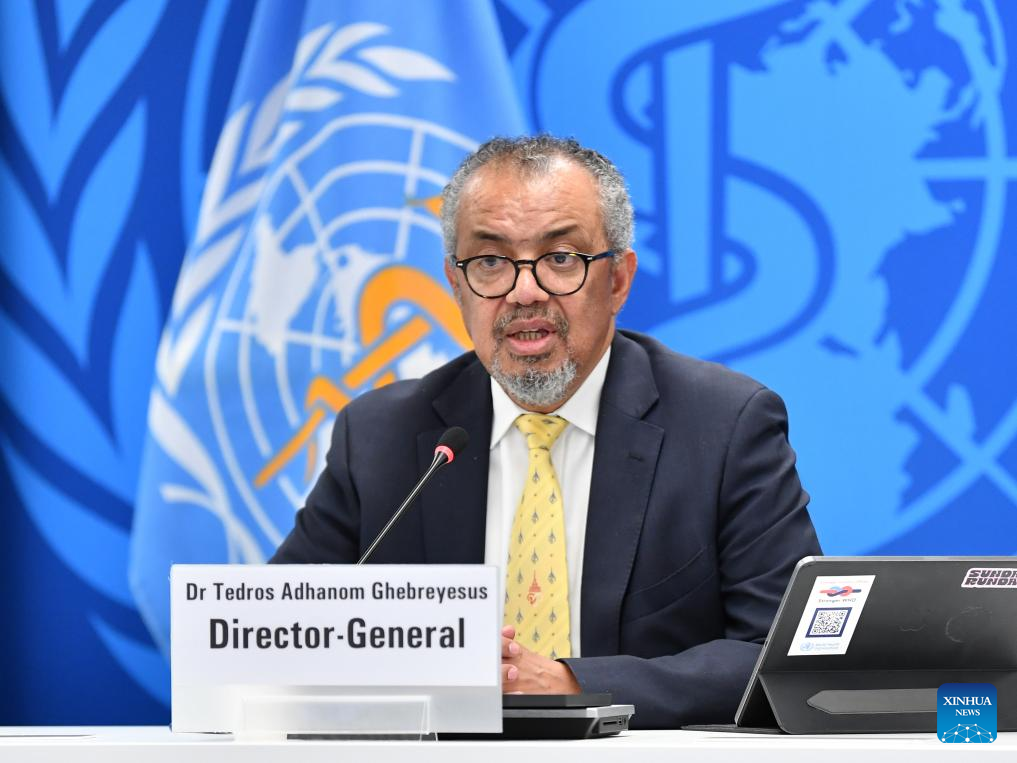
World Health Organization (WHO) Director-General Tedros Adhanom Ghebreyesus speaks during a press briefing in Geneva, Switzerland, Dec. 11, 2025. (Xinhua/Lian Yi)
GENEVA, Dec. 11 (Xinhua) -- The year 2025 has brought both significant progress and major challenges for the World Health Organization (WHO) and global health more broadly, WHO Director-General Tedros Adhanom Ghebreyesus said on Thursday.
Speaking at a media briefing organized by the Association of Correspondents Accredited to the United Nations (ACANU), Tedros delivered a wide-ranging review of the year, citing historic public health achievements while warning of intensifying geopolitical and operational threats.
Tedros said immunization remained a cornerstone of global health progress. "Over the past 25 years, under-five mortality has dropped by more than half, from 11 million deaths a year to 4.8 million, and vaccines are the major reason for that," he said. "Vaccines are among the most powerful, transformative inventions in the history of humankind."
Among the year's standout developments, the World Health Assembly adopted the landmark WHO Pandemic Agreement. Described by Tedros as a turning point, the agreement is intended to strengthen global readiness for future health emergencies. Member states are currently negotiating an annex focused on ensuring equitable access to countermeasures.
Several countries also marked major disease control milestones in 2025. "With WHO support, Maldives became the first country to achieve triple elimination of mother to child transmission of HIV, syphilis and hepatitis B," Tedros said. In addition, seven new countries rolled out WHO-approved malaria vaccines, broadening protection across more communities.
WHO's emergency response operations remained in high gear. The agency responded to dozens of health crises worldwide, including outbreaks of Ebola, Marburg virus and widespread cholera. But these efforts are being carried out under growing strain, Tedros noted.
He raised deep concern over the increasing number of attacks on health workers and facilities in conflict zones. "So far this year, WHO has verified 1,272 attacks in 18 countries and territories, causing almost 2,000 deaths," he said.
Meanwhile, WHO is confronting a severe financial crisis, which Tedros attributed to steep reductions in development assistance and the announced intent by a major member state to scale back its support
"The announcement by the United States of significant funding cuts ... left us facing a salary gap for the next two years of about 500 million U.S. dollars," Tedros said. The resulting prioritization has led to large-scale workforce reductions, he added.
Despite these challenges, Tedros reaffirmed the organization's commitment to its founding principles. "We remain committed to the vision the nations of the world had when they founded this organization in 1948: the highest attainable standard of health - not as a luxury for some, but a right for all," he said. ■
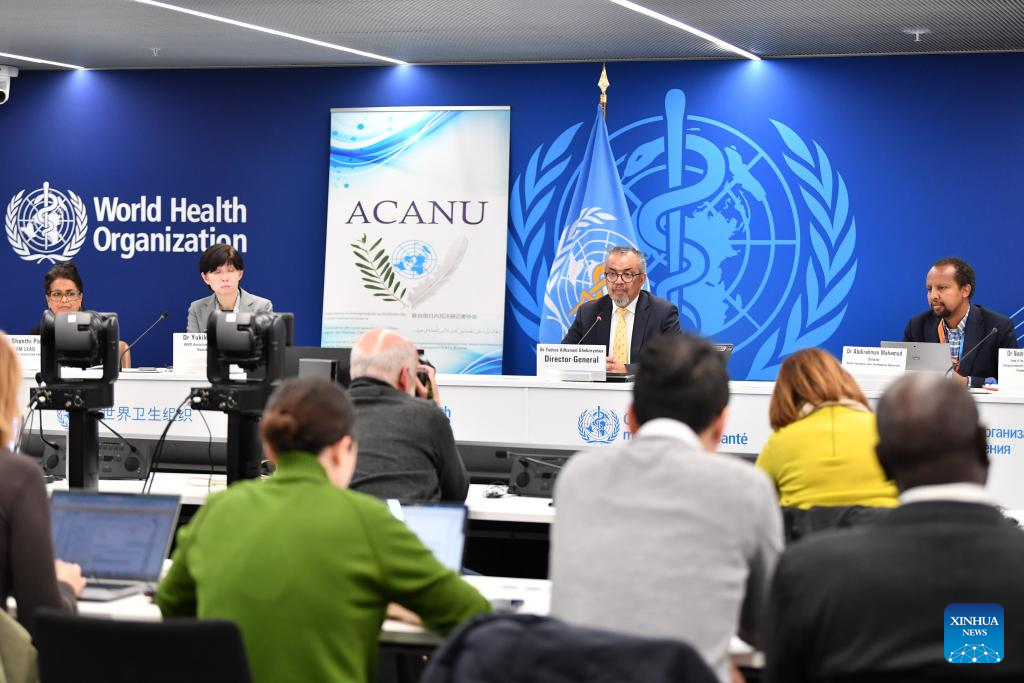
World Health Organization (WHO) Director-General Tedros Adhanom Ghebreyesus (2nd R) speaks during a press briefing in Geneva, Switzerland, Dec. 11, 2025. (Xinhua/Lian Yi)
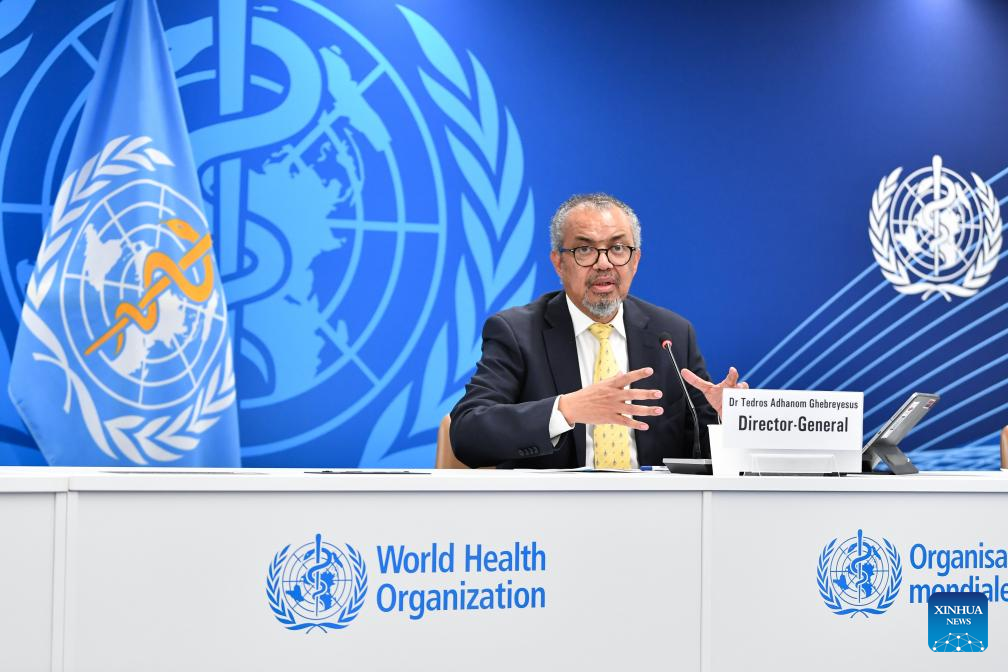
World Health Organization (WHO) Director-General Tedros Adhanom Ghebreyesus speaks during a press briefing in Geneva, Switzerland, Dec. 11, 2025. (Xinhua/Lian Yi)


